Why Everyone Should Experience Burning Man at Least Once
A first-timer’s reflection on survival, love, and transformation in the desert

It’s been two days since I returned from the playa.
Two days since I rinsed the dust from my skin, unpacked the gear, and stepped back into what Burners call the “default world.” And yet my mind is still there—turning over conversations, lessons, and moments that cut through me with such force that I know they’ll shape my life for years to come.
It’s tempting to just keep moving, to let life sweep me forward into the next task, the next meeting, the next responsibility. But I know myself. If I don’t stop and integrate, these moments will fade into the background like sand carried away by the desert wind.
Burning Man is not just a festival. It’s not just music and art. It’s a way of life—rooted in ten principles that sound simple on paper but feel utterly profound when lived in the desert: radical self-reliance, radical inclusion, gifting, participation, decommodifcation, leave no trace, immediacy, communal effort, civic responsibility, and radical self-expression.
For me, this Burning Man became a key life event that permanently altered my life. Alongside my first Coachella in 2022, 10-day buddhist retreat, and my wedding, Burning Man joins this short list of experiences that forced me to rethink what it means to be alive.
Before I go further, I want to make something clear: what made Burning Man transformative for me wasn’t the art cars, the sunrise sets, or even the 100-foot man burning at the end of the week. It was the people. The connections I made were the true heartbeat of my experience — each one carrying its own story, its own wisdom, and its own lesson that will stay with me long after the dust fades. What follows are some of the most powerful connections and conversations that shaped Burning Man into one of the most life-changing events I’ve ever had.
Radical Self-Reliance: A Different Kind of Survival
The desert strips you bare.
Every day on the playa, I had to ask myself the simplest of questions:
Have I eaten?
Am I hydrated?
Have I slept enough?
Do I need shade?
Do I need to use the restroom?
The questions sound trivial, but under 100-degree sun with dust storms rolling in, they’re life-and-death.
Radical self-reliance isn’t about rugged independence for its own sake—it’s about cultivating an intimacy with yourself so precise that you can anticipate your body’s needs before it fails. It reminded me of Maslow’s first rung: physiological needs. You cannot think about esteem, belonging, or actualization until you’ve eaten, rested, and survived.
In Tesla’s breakneck pace, I often forgot this. I lived in constant reactivity, meeting after meeting, never pausing to ask if I’d eaten or rested. On the playa, the opposite was true: nothing moved forward unless those needs were met.
And strangely, that foundation created space for safety, deeper connection, joy and esteem, and the meaning to create — all of which follow the Maslow Hierarchy of Needs Framework.
The Hug That Changed Everything
One of the most profound moments of my Burn wasn’t under the lasers at night or in front of a giant sculpture—it was in the middle of a modest workshop on conflict management.
As the session ended, a woman approached me and asked simply: “Do you want a hug?”
I said yes.
It was nothing extraordinary. Just two humans embracing in the desert. But something shifted inside me. The hug cracked me open in a way I didn’t expect.
Later, I learned her story: she was a stage four cancer survivor. She had spent 25 years working in some of the harshest corners of the globe, witnessing suffering on a scale most of us can’t fathom. Eventually, her body broke down—perhaps a genetic predisposition, perhaps years of trauma stored in her cells.
But there she was: alive, radiant, present, hugging strangers on the playa. She spoke of her son with joy. She described how cancer reshaped her life—not as an end, but as an invitation to truly live.
We sat for hours, and the noise of Burning Man—the music, the art, the free food, the chaos—faded into the background. I wasn’t distracted. I wasn’t scanning the horizon for what was next. I was fully there, listening to a woman who redefined what resilience meant.
That hug wasn’t just physical contact. It was a transmission: live while you can, love while you can, don’t wait.
Her presence into my life will forever change the way I interpret what it means to live. You can follow her story here too: Journeys Within and Beyond
Meeting Rick Doblin: A Mirror of My Own Mind
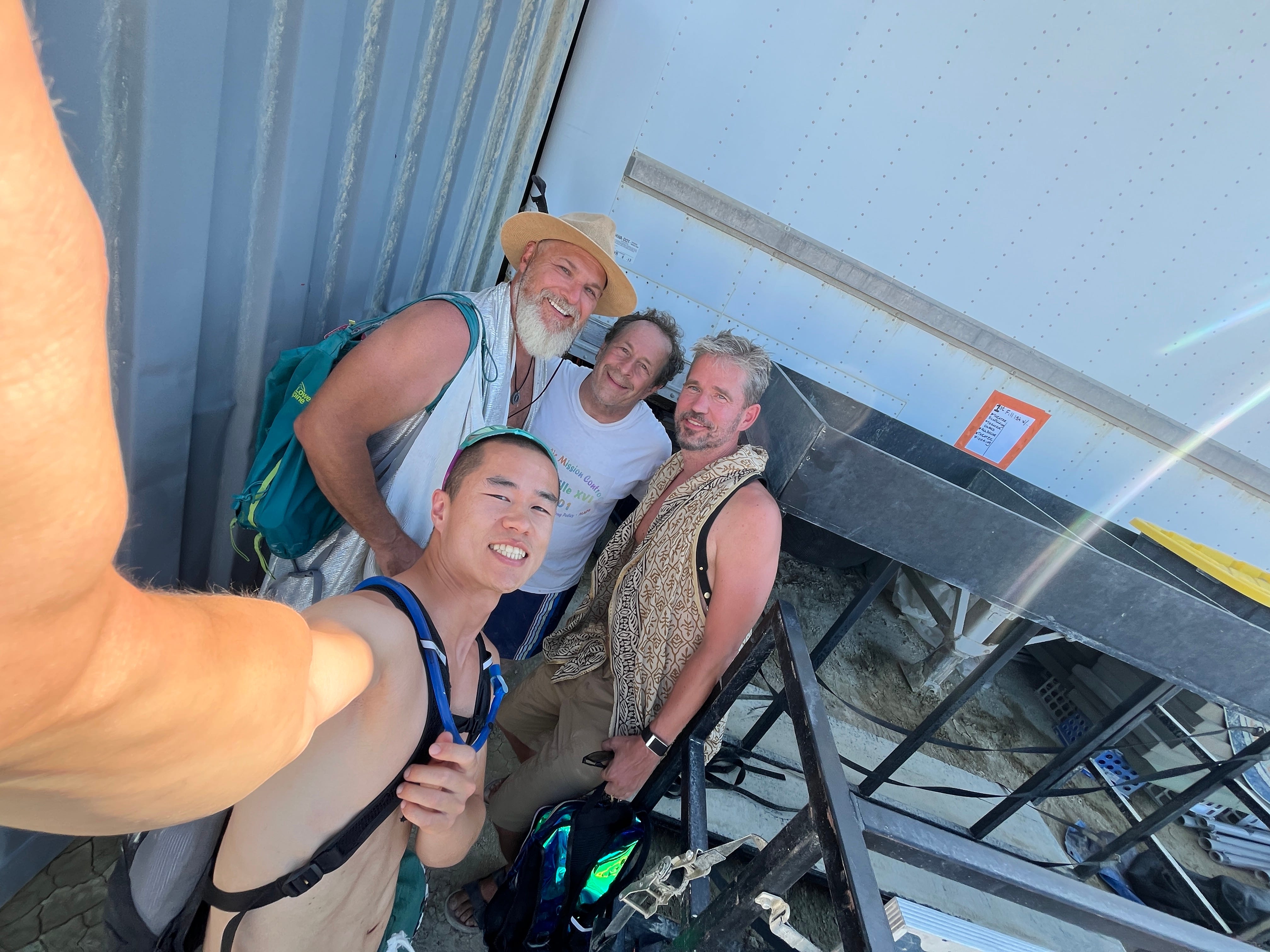
Another day, I wandered into a talk on neuroscience. To my surprise, the speaker was Rick Doblin, founder of MAPS (Multidisciplinary Association for Psychedelic Studies).
Rick has dedicated over 30 years to legitimizing psychedelic research—navigating policy, regulation, and stigma to bring healing tools into mainstream medicine.
After his talk, I found myself in a small circle with him, crouched in the shade of a semi-trailer to escape the sun. There were only four of us.
At one point, Rick turned to me and asked: “Have you heard of Maslow’s hierarchy of needs?”
I nearly broke down.
That framework has been my compass for years. It’s how I evaluate my own life, my relationships, my career decisions. It’s how I make sense of motivation and meaning.
To hear those words from Rick Doblin—someone whose work bridges science, therapy, and spirituality—was like being seen at the deepest level. He didn’t just validate my worldview; he confirmed that this way of thinking was not just personal, but universal.
It felt like meeting a teacher I had been waiting for.
The Welding Artist: A Glimpse Into My Future
While waiting for a hot air balloon ride, I struck up a conversation with a man who had spent decades as a welding artist. He split his time between Los Angeles and New York, shaping metal into beauty.
He never had children, but life surprised him with a grandson through his partner’s family. And as he spoke about this boy—his eyes glowing with pride—I saw what it meant to embrace unexpected blessings.
In him, I saw a possible version of myself: an artist-engineer, creating for decades, living between cities, and eventually gifted with family in an unconventional way.
The conversation reminded me that our lives don’t unfold linearly. That meaning doesn’t always come from what we plan. Sometimes it’s given, unexpectedly, in the form of a child, a partner, or a stranger.
A Father in the Desert
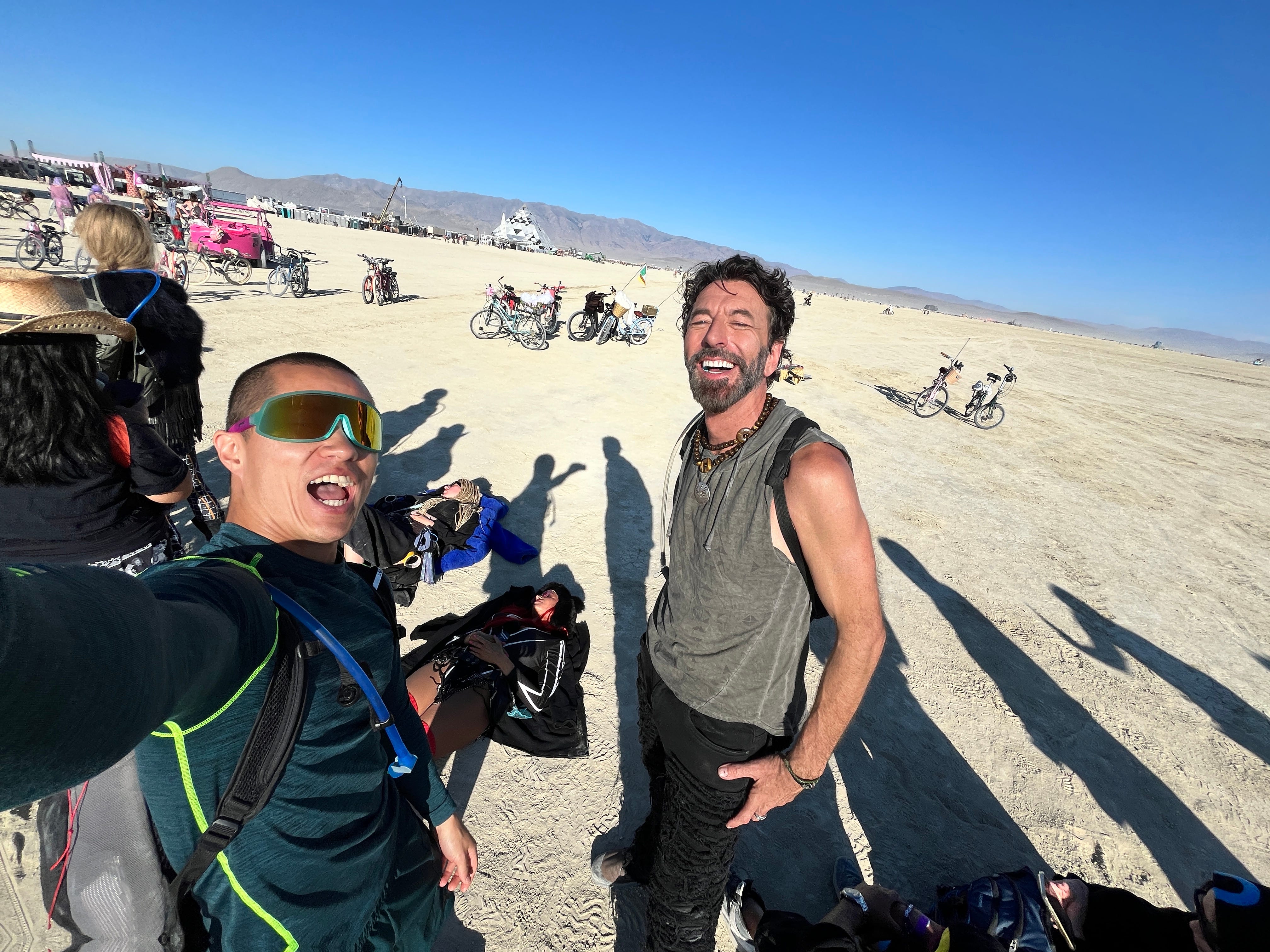
At my own camp, there was a man who acted as a father figure to everyone. He had been to Burning Man five times, and while most of us were in our 30s, he carried himself with the wisdom of a parent.
He looked out for us. He cracked jokes. He made sure we ate. And when I visited the temple—a place where grief hangs heavy in the air—he stood by me, quietly present, offering comfort without words, and sharing the heartbroken pain I felt like I carried alone in the past year.
For me, he became a second father. A reminder of the love and support I crave, the kind I sometimes wish my own father and family showed in the same way.
That bond healed something in me. It reminded me that family is not just blood. Sometimes, it’s who shows up beside you in the dust.
The Full Spectrum of Being Human
Burning Man was so special because it touched on every aspect of human feeling and emotion. The irritation and frustration of the blowing wind and sandstorms early in the week. The awe of seeing the Man and the Temple engulfed in flames. The deep gratitude for the connections I made and the kindness I received. The sorrow of letting go of something sacred inside the Temple. The joy and playfulness of dancing in the desert. The grief of past memories resurfacing. The curiosity sparked by conversations with strangers. The empathy of sharing hugs with those in pain. The anxiety of navigating the elements. The relief of a simple shower. The peace of falling asleep in comfort after a long day. At Burning Man, I felt it all — happiness, sadness, jealousy, awe, grief, inspiration, love. Even a nervous system reset, where I could feel energy in my core wanting to release. Burning Man doesn’t just give you experiences; it gives you the entire palette of what it means to be human.
The Principles in Action
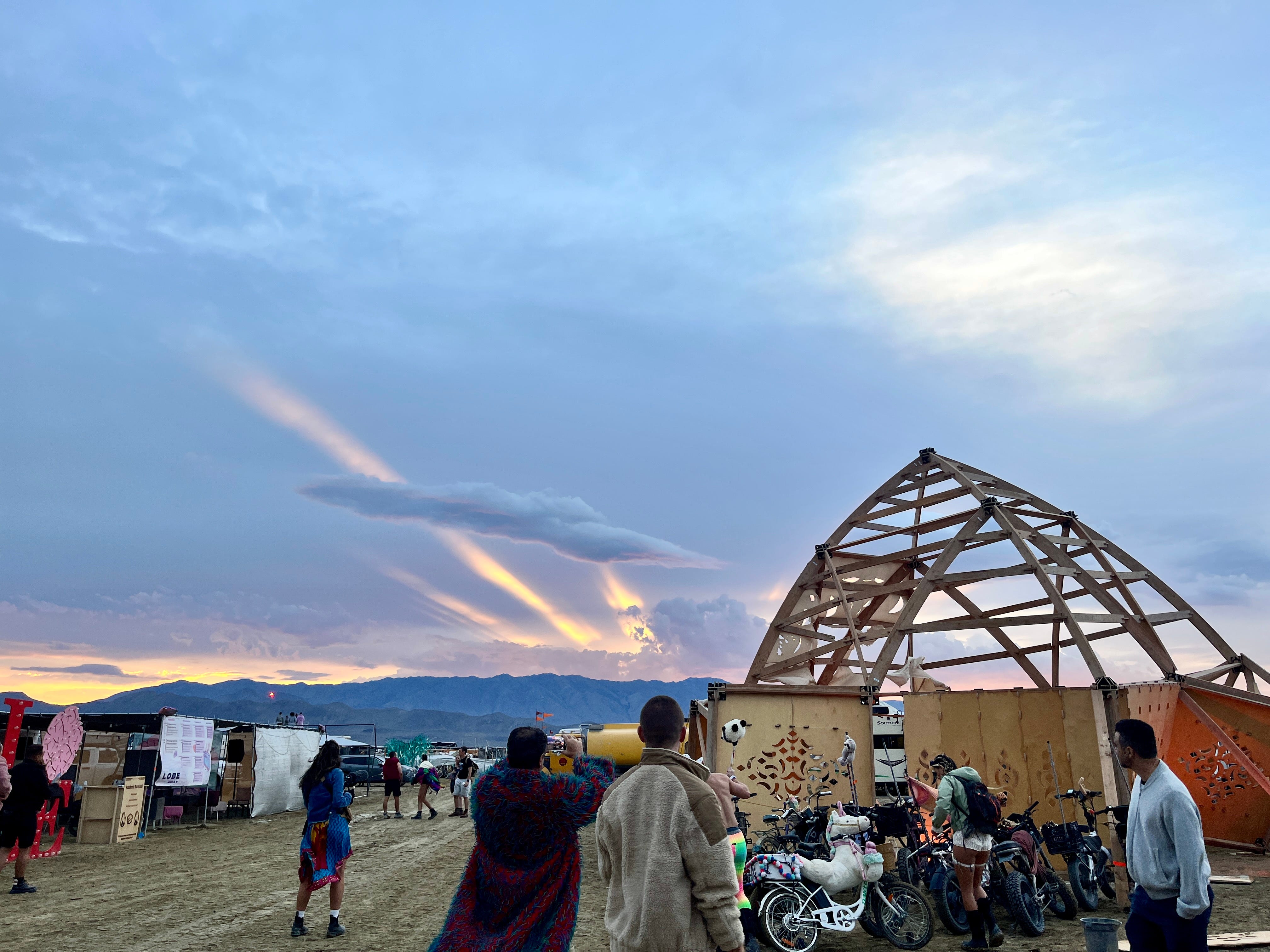
Of course, Burning Man dazzles: the sunrise rides, the giant art installations, the mind-bending scale of the Man burning against the night sky.
But what mattered most was how the principles came alive through people.
Radical Inclusion: Strangers welcomed me like family — from artists to psychotherapists, no introductions needed.
Gifting wasn’t about material things—it was the welding artist sharing his story, the cancer survivor sharing her hug.
Decommodification: No brands, no ads, no transactions — only human connection without price tags.
Radical Self-reliance: The desert demanded it. No one else could know my needs better than I did, and no one else was responsible for meeting them.
Radical Self-expression: Costumes, massive art, spontaneous conversations — everyone shared their truest selves in a space of no judgement.
Communal Effort: Camps built together, meals cooked together, strangers becoming family through shared work.
Civic Responsibility: Safety and respect mattered — bike lights, alcohol rules, collective care for one another. The cleanest (and most decorated) porta-potties I’ve ever seen.
Leave No Trace: Not a can or feather left behind. Even the smallest debris was picked up that wasn’t yours.
Participation: There are no spectators. You dance in the art, climb it, live it.
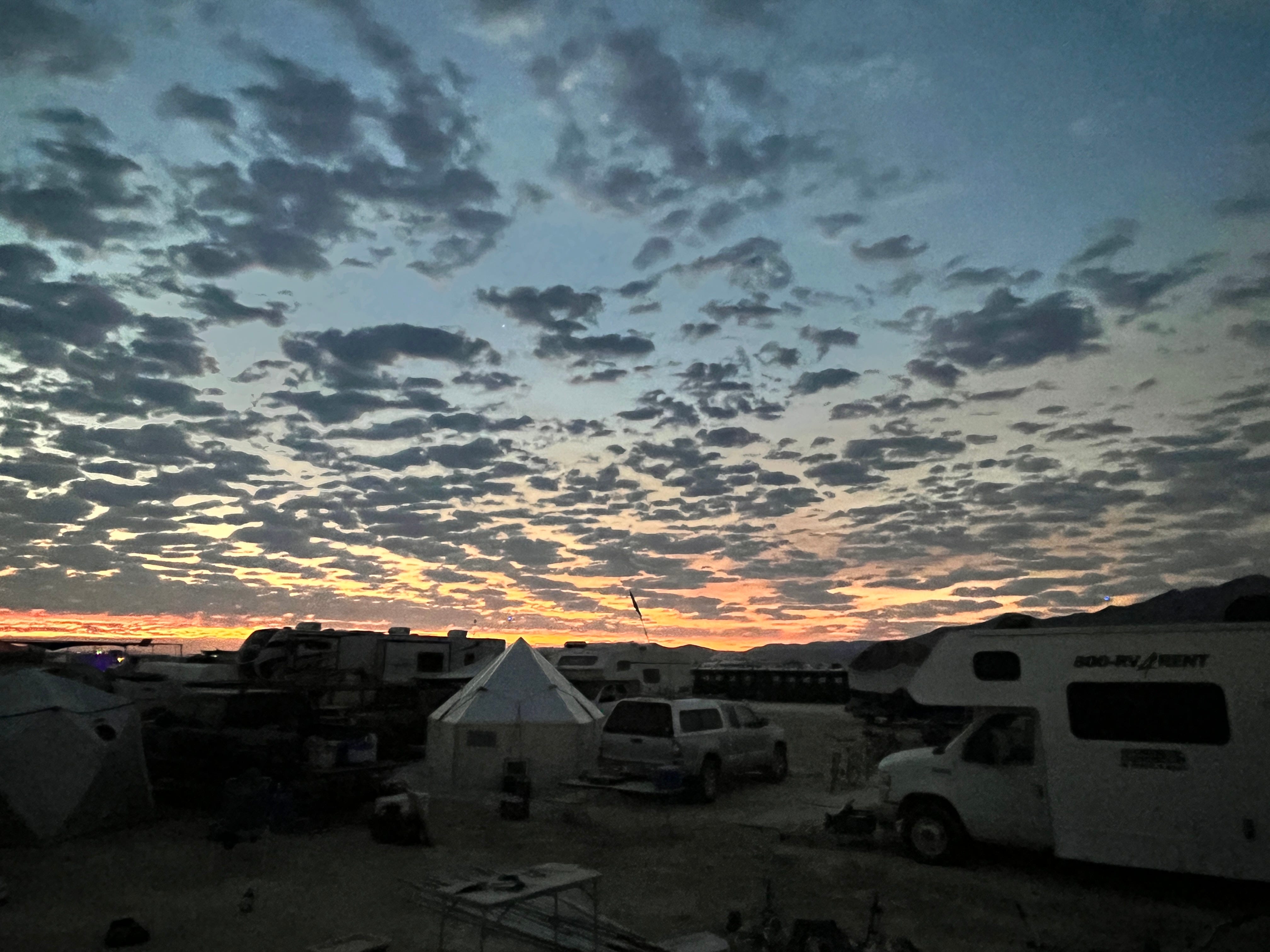
Immediacy: Sunsets, hugs, and moments of presence — reminders to stop, feel, and simply be.
The love and kindness created from a community of sharing and giving is what made Burning Man special. It’s what modern society should model more of.
Integration: What Remains After the Fire
Now, back in the default world, I see the contrast. Trash on the streets. People rushing. Disconnection everywhere.
But I also see opportunity.
I can carry Burning Man with me—not as nostalgia, but as practice. I can be more self-reliant. More kind. More present. I can embody the principles in my daily life, whether at my next job, with my friends and family, or in how I show up for strangers.
Burning Man reminded me that abundance multiplies when it is shared. That mirror neurons spread kindness as easily as cruelty. That meaning is not in what we build or burn, but in the connections we create.
And so as I close this reflection, I hope more people can experience something like this. Even once in their life.
Because Burning Man isn’t about escaping reality. It’s about reimagining it.
To many more burns. 🔥
A wonderful, inspiring piece, Aaron! You’ve cut through the projections and surface images that many perceive erroneously of this event. You’ve articulated the genuine soul experience of the Playa. 🙏
Loved this piece! It was such a privilege and a deep joy to meet you—thank you for your generous words.